– A European contribution to HWO
Pollux
High-Resolution Spectroscopy & Polarimetry for HWO
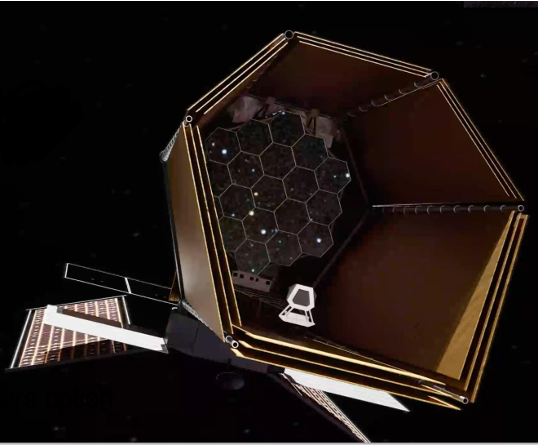
Pollux is the first instrument ever designed to perform spectropolarimetry from space across a continuous wavelength range from the far ultraviolet to the near infrared. Proposed as a European contribution to NASA's Habitable Worlds Observatory (HWO), it will characterise stellar and planetary magnetospheres, trace the baryon cycle across cosmic time, and probe the atmospheres of exoplanets in search of life.
The main science cases of Pollux cover three interconnected themes: stars, (exo-)planets, and cosmic ecosystems — all organized around the core HWO science portfolio. Since the parameter space opened by Pollux is essentially uncharted territory, its potential for ground-breaking discoveries is tremendous.
– LATEST NEWS
February 2026
The Pollux Instrument Concept for HWO
New paper by Neiner et al. presenting the full Pollux concept: design, science drivers, technology challenges, and the consortium organization.
arXiv:2602.09828
8–10 April 2026
Pollux Workshop — Leuven
The Pollux consortium will meet in Leuven to review the science cases that have been proposed, define the final trade-offs of Pollux, and discuss some critical technologies and engineering issues.
December 2026
HWO Europe Symposium — Massy (near Paris)
please visit HWO2026’s website: https://hwo2026.obspm.fr/….
Pollux and Stellar science
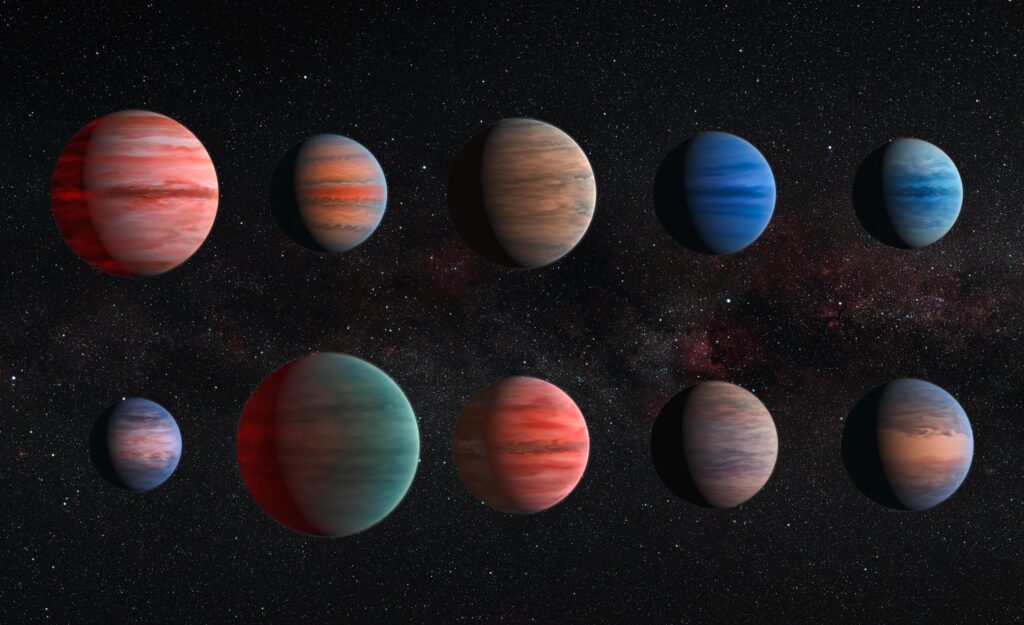
Pollux and Planets
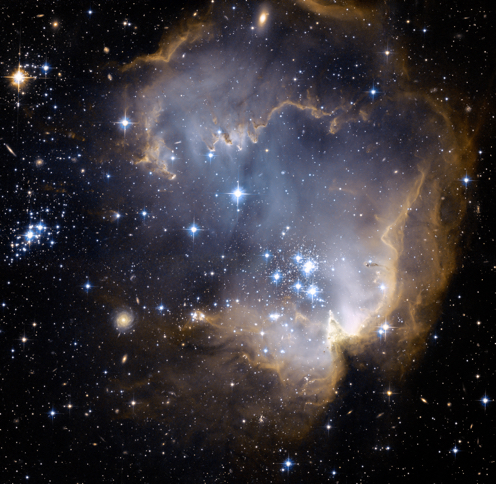
Pollux and science of cosmic ecosystemS
– Pollux in a nutshell :
WAVELENGTH COVERAGE

Some instrumental facts
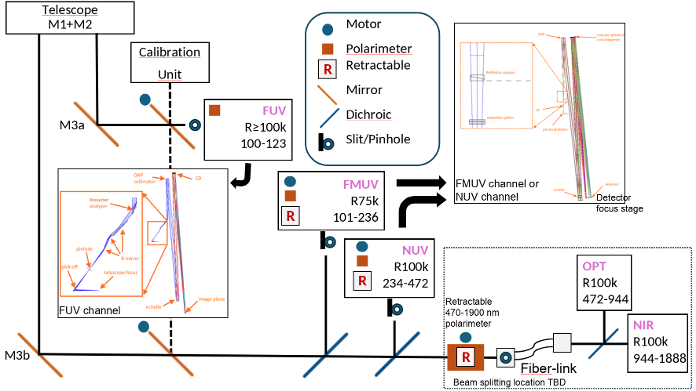
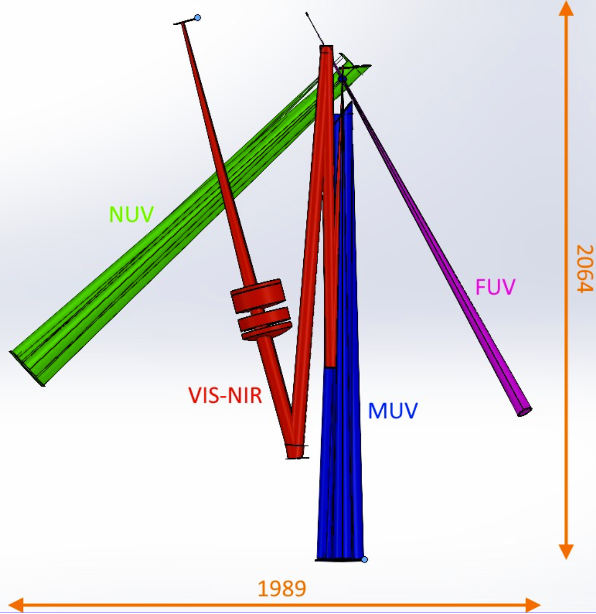
5 channels
FUV · MUV · NUV · OPT · NIR
5 high-resolution spectrographs
R ~ 100 000
Simultaneity from MUV to NIR
4 channels at once
Circular and linear polarimetry from 120 nm to 1.9 microns
Slit Spectroscopy in MUV and NUV
3 » slit

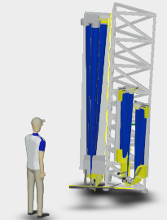
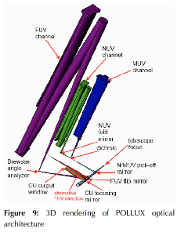
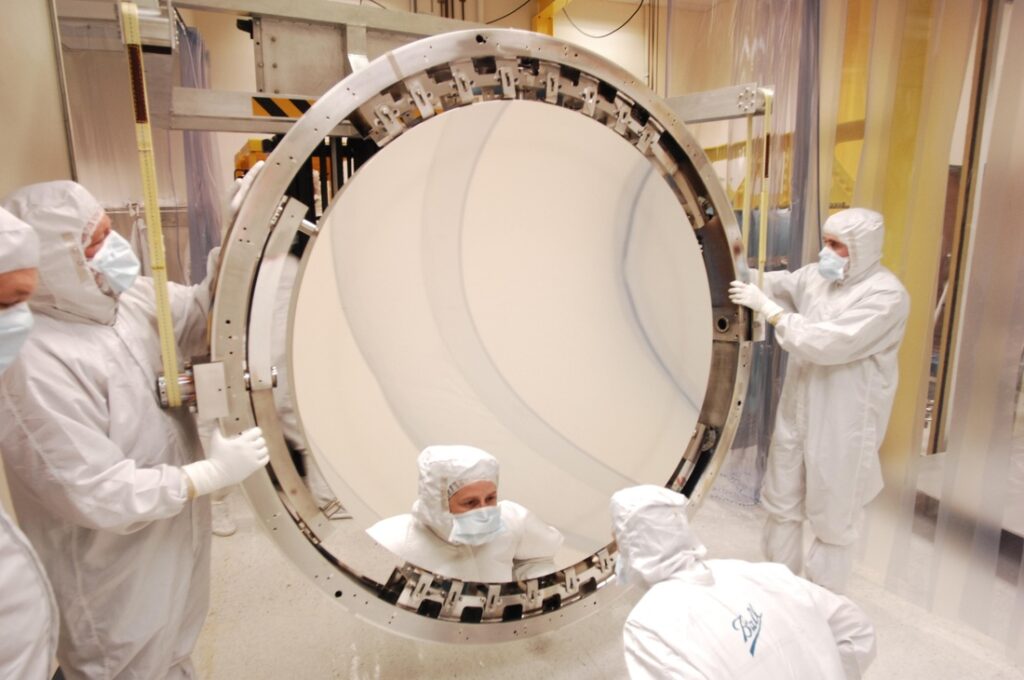
– Technology developments for Pollux
- gratings and optics
- detectors
- coatings
- mechanics
- electronics
- software
The Pollux Consortium
Pollux is developed by a consortium of European scientists and institutes
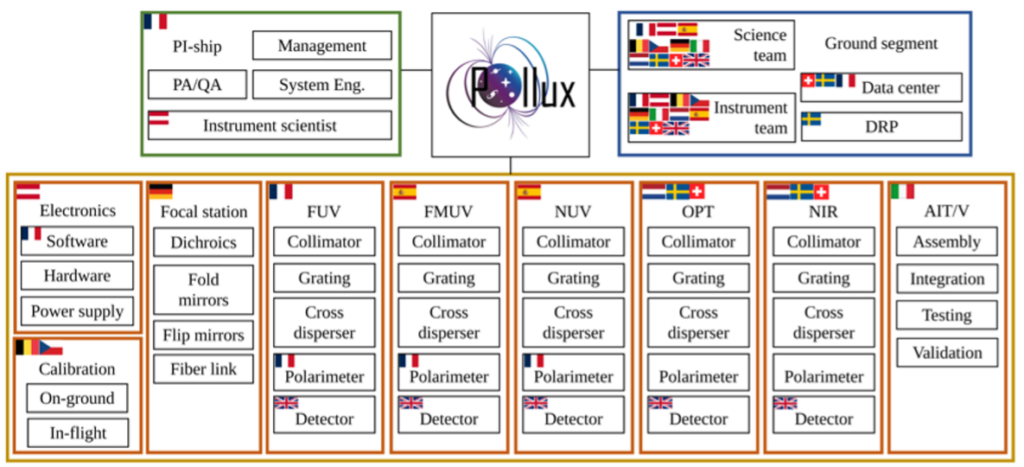
Supported by national space agencies, under French (CNES) leadership
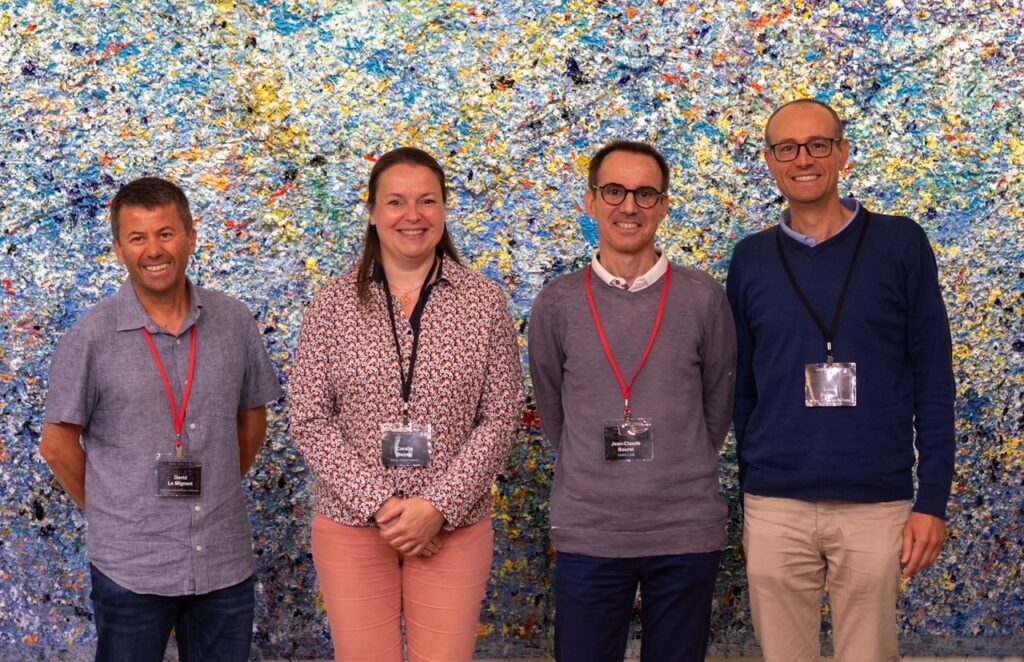
Meet the Project Office
From left to right :
-
David Le Mignant, Project Manager
-
Coralie Neiner, PI
-
JC Bouret, co-PI
-
Luca Fossati, Instrument Scientist
To reach us, send an email at pollux.po@lam.fr
If you want to join us
To register to a mailing list of information, send an email to sympa@lam.fr with an empty body and a subject line of the form:
subscribe list Firstname Lastname
where you should replace “Firstname Lastname” by your name and “list” by the mailing list you want to subscribe to. To subscribe to several lists, they you must send several emails (one per list).
The different mailing lists are:
pollux.consortium@lam.fr for the global Pollux consortium
pollux.science@lam.fr for the Pollux science consortium
pollux.payload@lam.fr for the Pollux payload consortium
pollux.swg-stars@lam.fr for the Science Working Group about Stars
pollux.swg-planets@lam.fr for the Science Working Group about Exoplanets (including solar system planets)
pollux.swg-cosmic@lam.fr for the Science Working Group about Cosmic ecosystems (ISM, IGM, CGM, galaxies, cosmological probes,…)